Light Roast vs Dark Roast: What Is the Real Difference?
The debate between light roast vs dark roast coffee is one of the most discussed topics in specialty coffee. While both start as the same green coffee beans, the roasting process transforms them into entirely different beverages with distinct flavor profiles, chemical compositions, and brewing requirements.
Understanding the difference between light and dark roast isn’t just about color—it’s about chemistry, taste, and how your morning cup affects your body. Whether you’re choosing light roast vs dark roast for your espresso machine or pour-over setup, this guide covers everything.
The Roasting Process Explained
Coffee roasting is essentially a controlled burning process. Green coffee beans are heated in a roaster until they undergo chemical transformations that create the flavors we associate with coffee.
Light roast coffee reaches internal temperatures between 350°F and 400°F (175°C–205°C). The beans are removed shortly after the “first crack”—an audible popping sound that occurs when pressure builds inside the bean. This minimal roasting preserves the bean’s original characteristics.
Dark roast coffee is heated to 430°F–450°F (220°C–232°C), well past the first crack and often through the “second crack.” At these temperatures, sugars caramelize extensively, and the bean’s cellular structure breaks down significantly, creating the oily surface and smoky flavors many coffee drinkers recognize.
When comparing light roast vs dark roast side by side, the temperature gap of 50+ degrees creates two completely different products from the same raw material.
Visual Differences: Color, Oil, and Bean Density
Table
| Characteristic | Light Roast | Dark Roast |
|---|---|---|
| Color | Light brown, tan, cinnamon | Dark brown, nearly black |
| Surface Oil | Dry, no visible oil | Oily, glossy surface |
| Bean Density | Higher, denser beans | Lower, expanded beans |
| Bean Size | Original size maintained | Expanded, larger |
| Aroma | Floral, fruity, herbal | Smoky, chocolate, nutty |
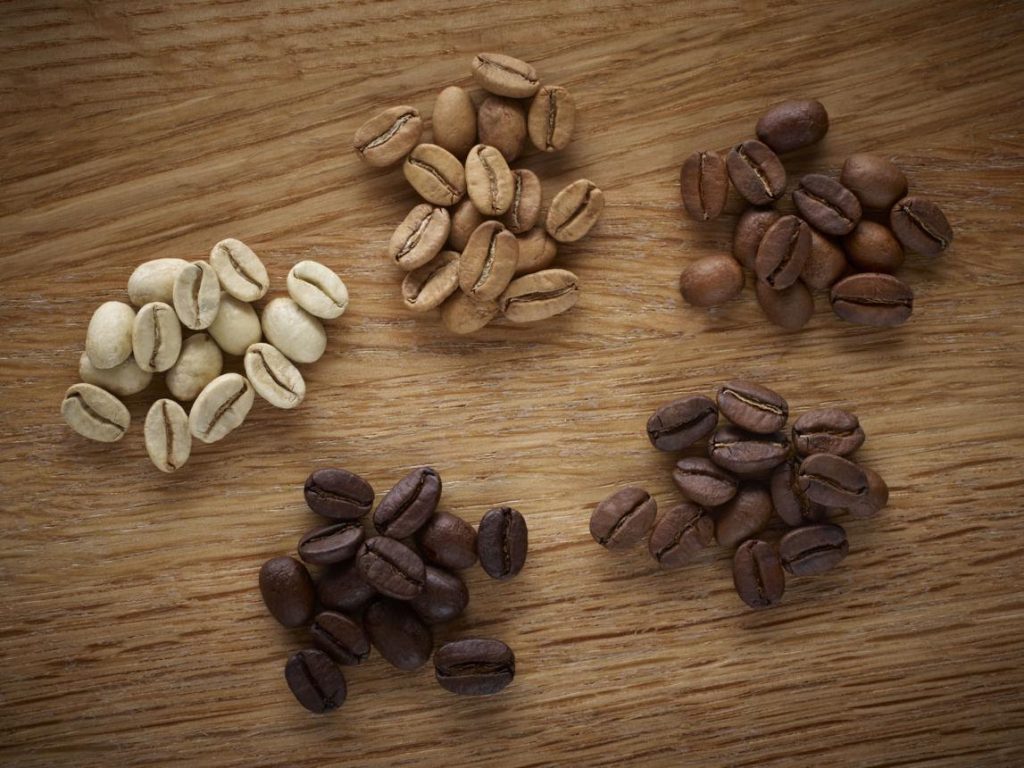
The visual distinction is immediate. Light roast beans look dry and pale, while dark roast coffee beans appear shiny with visible oils that migrate to the surface during extended heating. If you’re examining light roast vs dark roast beans at a café, the oil sheen is your quickest identifier.
Light Roast vs Dark Roast Flavor Profile Comparison
When comparing light roast vs dark roast flavor, you’re essentially choosing between origin expression and roast expression. The light roast vs dark roast taste difference is the #1 factor in choosing your daily brew.
Light Roast Taste Characteristics
Light roast coffee preserves the unique flavors of the bean’s origin—the terroir, processing method, and varietal. These coffees often showcase:
- Brightness and acidity (think citrus, berry, apple)
- Floral aromatics (jasmine, rose, lavender)
- Fruity sweetness (stone fruit, tropical fruit, dried fruit)
- Tea-like body (lighter, more delicate mouthfeel)
- Complex, layered flavors that evolve as the cup cools
Popular light roast descriptors include Ethiopian Yirgacheffe’s blueberry notes, Kenyan AA’s blackcurrant brightness, and Panamanian Gesha’s jasmine perfume. For many specialty coffee enthusiasts, light roast vs dark roast isn’t even a debate—light roast wins on complexity alone.
Dark Roast Taste Characteristics
Dark roast coffee emphasizes flavors created by the roasting process itself through the Maillard reaction and caramelization:
- Low acidity (smooth, mellow)
- Bold, heavy body (syrupy, rich mouthfeel)
- Bittersweet chocolate and cocoa notes
- Toasted nuts and caramel sweetness
- Smoky, earthy, or spicy undertones
- Consistent, predictable flavor regardless of origin
Traditional Italian espresso blends and French roasts exemplify this profile—reliable, intense, and familiar. If you prefer light roast vs dark roast for consistency, dark roast delivers the same experience cup after cup.
The Myth of “Stronger” Coffee
Here’s where most coffee drinkers get confused. When people ask “which roast is stronger, light or dark?” they’re usually conflating two different concepts:
- Caffeine strength (stimulant effect)
- Flavor intensity (taste perception)
Dark roast tastes stronger because bitter compounds and roast flavors dominate the palate. The aggressive, smoky profile hits harder on first sip. However, light roast actually contains more caffeine by weight, and its bright acidity creates a more complex, intense sensory experience for trained palates.
“Strong” is subjective. If you define it by caffeine, light roast wins. If you define it by bold, bitter flavor, dark roast takes the crown. The light roast vs dark roast “strength” question always needs clarification.
Light Roast vs Dark Roast Caffeine Content
The light roast vs dark roast caffeine debate has persisted for decades, fueled by misconceptions and incomplete information. Let’s settle it with science.
Measuring by Weight vs Volume
This is the critical distinction that explains the confusion:
Table
| Measurement Method | Light Roast | Dark Roast | Winner |
|---|---|---|---|
| By weight (grams) | More caffeine | Less caffeine | Light Roast |
| By volume (scoops) | Less caffeine | More caffeine | Dark Roast |
Why? Roasting burns off moisture and expands the bean. Dark roast beans are larger and lighter individually. If you measure coffee with a scoop, you fit fewer dark roast beans (which are puffy) than dense light roast beans. If you weigh your coffee, you use more individual dark roast beans to hit the same gram target, but each bean has slightly less caffeine due to degradation during extended roasting.
Scientific consensus: When brewed by weight—the standard for specialty coffee—light roast contains marginally more caffeine. The difference is approximately 5–10%, not enough to dramatically affect your morning unless you’re drinking extreme volumes.
According to research published in the Journal of Analytical Toxicology, caffeine is relatively stable during roasting but experiences minor degradation at temperatures exceeding 430°F (220°C). Since dark roasts push into this territory while light roasts stop well below it, the chemical preservation favors lighter profiles.
However, for practical purposes, the light roast vs dark roast caffeine difference is negligible. Your brewing method, coffee-to-water ratio, and serving size affect your caffeine intake far more than roast level.
Light Roast vs Dark Roast: Acidity and Health Benefits
Coffee health claims often center on antioxidants, and roast level significantly impacts these compounds.
Chlorogenic Acid in Light Roasts
Chlorogenic acids (CGAs) are powerful antioxidants abundant in raw coffee. These compounds:
- Reduce inflammation
- Support blood sugar regulation
- Provide neuroprotective benefits
- Contribute to coffee’s signature acidity
Light roast coffee retains up to 60% more chlorogenic acid than dark roast because extended heat breaks down these delicate molecules. If you’re drinking coffee partly for health benefits, light roast offers superior antioxidant content. This is a major factor in the light roast vs dark roast health debate.
Antioxidant Levels by Roast Level
Table
| Compound | Light Roast | Medium Roast | Dark Roast |
|---|---|---|---|
| Chlorogenic Acid | High | Moderate | Low |
| Quinic Acid | Low | Moderate | High (bitter) |
| N-methylpyridinium | Low | Moderate | High (stomach-friendly) |
| Melanoidins | Low | Moderate | High |
Interestingly, dark roast develops other beneficial compounds like N-methylpyridinium, which reduces stomach acid production. Dark roast may be easier on sensitive digestive systems despite lower overall antioxidant levels.
Bottom line: Light roast wins on total antioxidants; dark roast wins on stomach comfort. Both offer health benefits. The Specialty Coffee Association provides extensive research on how roasting affects coffee chemistry.
Best Brewing Methods for Light Roast vs Dark Roast
Not all brewing methods treat light roast vs dark roast equally. Matching technique to roast level maximizes flavor extraction.
Light Roast: Pour Over, AeroPress, Cold Brew
Light roast coffee demands precision. The dense, hard beans require:
- Pour Over (V60, Chemex, Kalita Wave)
- Water temperature: 200°F–205°F (93°C–96°C)
- Grind: Medium-fine
- Why it works: Controlled extraction highlights delicate floral and fruity notes without overwhelming them
- AeroPress
- Water temperature: 185°F–200°F (85°C–93°C)
- Grind: Medium
- Why it works: Immersion plus pressure extracts dense light roast efficiently
- Cold Brew
- Steep time: 16–20 hours
- Grind: Coarse
- Why it works: Extended cold extraction pulls sweetness while minimizing acidity brightness
Avoid automatic drip machines with light roast—they often lack the temperature stability to extract properly, resulting in sour, underdeveloped cups. The light roast vs dark roast brewing difference is stark: light roast punishes imprecision.
Dark Roast: Espresso, French Press, Moka Pot
Dark roast coffee is forgiving and versatile, thriving in methods that embrace boldness:
- Espresso
- Water temperature: 195°F–200°F (90°C–93°C)
- Grind: Fine
- Why it works: Pressure extraction concentrates chocolate and caramel notes; traditional Italian espresso was essentially invented for dark roasts
- French Press
- Water temperature: 195°F–200°F (90°C–93°C)
- Grind: Coarse
- Steep: 4 minutes
- Why it works: Full immersion extracts oils and body; metal filter preserves richness
- Moka Pot
- Water temperature: Steam pressure (automatic)
- Grind: Medium-fine
- Why it works: Stovetop pressure creates near-espresso intensity perfect for dark roast’s bold profile
Dark roast’s solubility and oil content make it ideal for milk-based drinks—lattes, cappuccinos, and flat whites rely on dark roast’s ability to cut through dairy without disappearing. For milk drinks, light roast vs dark roast is no contest: dark roast wins.
How to Choose: Light or Dark Roast?
Deciding between light roast vs dark roast comes down to personal preference, but this framework helps:
Decision Matrix
Table
| Your Priority | Choose Light Roast | Choose Dark Roast |
|---|---|---|
| Flavor adventure | ✅ Origin complexity | ❌ Roast uniformity |
| Smooth, easy drinking | ❌ Can be acidic | ✅ Mellow, low acid |
| Milk-based drinks | ❌ Gets lost in dairy | ✅ Stands up to milk |
| Health/antioxidants | ✅ Higher CGAs | ❌ Lower CGAs |
| Caffeine maximization | ✅ Slightly more | ❌ Slightly less |
| Stomach sensitivity | ❌ Higher acidity | ✅ Gentler, less reflux |
| Brewing simplicity | ❌ Requires precision | ✅ Forgiving |
| Morning ritual | ✅ Bright, awakening | ✅ Bold, grounding |
Beginner Recommendations
New to specialty coffee? Start here:
- If you drink black coffee: Try a medium-light roast from Ethiopia or Colombia. You’ll taste blueberry, caramel, and citrus without overwhelming acidity.
- If you add milk/sugar: Begin with a medium-dark roast Brazilian or Sumatran. The chocolate and nut flavors complement dairy naturally.
- If you’re switching from commercial coffee: Go medium roast first. It’s the bridge between dark roast bitterness and light roast brightness.
Still unsure about light roast vs dark roast? Buy a split bag or sample pack and taste them side by side. Your palate will tell you immediately.
Light Roast vs Dark Roast: Quick Reference Table
Table
| Feature | Light Roast | Dark Roast |
|---|---|---|
| Roast Temperature | 350°F–400°F | 430°F–450°F |
| Color | Light brown | Dark brown/black |
| Surface Oil | None | Visible |
| Acidity | High, bright | Low, mellow |
| Body | Light, tea-like | Heavy, syrupy |
| Origin Flavor | Preserved | Masked |
| Roast Flavor | Minimal | Dominant |
| Caffeine (by weight) | Higher | Lower |
| Caffeine (by scoop) | Lower | Higher |
| Antioxidants | Higher | Lower |
| Best Brewing | Pour over, AeroPress | Espresso, French press |
| Best For | Black coffee, tasting | Milk drinks, daily driver |
Frequently Asked Questions
Conclusion: Your Perfect Roast Awaits
The light roast vs dark roast choice isn’t about right or wrong—it’s about matching coffee to your taste, brewing habits, and body.
Choose light roast if you:
- Love exploring unique flavors
- Drink coffee black
- Want maximum antioxidants
- Enjoy brewing as a ritual
- Prefer bright, complex cups
Choose dark roast if you:
- Value consistency and boldness
- Add milk or sweeteners
- Need a gentle stomach experience
- Want forgiving, easy brewing
- Crave that classic “coffee” taste
Better yet, keep both in your rotation. Morning might call for a bright Kenyan light roast; afternoon espresso demands a chocolatey Brazilian dark roast. The beauty of specialty coffee is that you never have to choose permanently between light roast vs dark roast.