For many, coffee is simply a morning ritual—a quick caffeine kick to start the day. But for a growing community of enthusiasts, baristas, and professionals, coffee is an artisanal product, much like fine wine or craft chocolate. This distinction marks the boundary between commodity consumption and culinary appreciation. This is where the concept of “specialty coffee” comes into play.
If you have ever wondered, “what is specialty coffee?”, the answer goes far beyond a fancy label on a bag or a higher price tag at the register. It is a rigorous, global standard of quality that governs every single step of the supply chain, from the micro-climate of the soil in which the bean grows to the precise temperature of the water in your cup. In this comprehensive guide, we will explore the science, the scoring systems, and the passion behind this global movement.
Defining the Standard: A Clear Specialty Coffee Definition
To truly define what is specialty coffee, we must look at the governing body of the industry: the Specialty Coffee Association (SCA). The SCA sets the benchmarks that producers, roasters, and brewers follow worldwide. Without a unified standard, the term would be merely marketing fluff.
What is Specialty Coffee According to SCA?
According to the specialty coffee association, coffee is only classified as “specialty” if it scores 80 points or higher on a 100-point scale during a professional sensory evaluation called “cupping.” This is the non-negotiable threshold.
This scoring system is not subjective; it is a scientific analysis conducted by certified Q Graders. These experts evaluate the beans based on specific attributes: fragrance/aroma, flavor, aftertaste, acidity, body, balance, uniformity, clean cup, sweetness, and overall impression.
If a batch of coffee contains primary defects (such as full black beans, sour beans, or foreign matter), it is immediately disqualified from the specialty category, regardless of how good it might taste otherwise.
In short, when we ask what is specialty coffee?, we are referring to coffee treated as a craft, not a commodity. It is the difference between a mass-produced product designed for consistency and a curated, artisanal experience designed for excellence.

The Science of Quality: How is Specialty Coffee Scored?
Understanding the mechanics behind the quality is crucial. A common question for beginners entering this world is: how is specialty coffee scored? The process is meticulous and standardized globally to ensure fairness and accuracy.
What Makes Coffee Specialty Grade?
To achieve a high specialty coffee grade, the green coffee beans must pass two distinct inspections:
- Green Coffee Inspection: A sample of 350g is analyzed for physical defects. To be specialty grade, the sample must have zero primary defects and very few secondary defects.
- Cupping Protocol: The coffee is roasted, ground, and brewed under strict conditions. The Q Grader assigns points to various flavor attributes. The final score determines the tier:
- 80–84.99: Very Good (Specialty)
- 85–89.99: Excellent (Specialty)
- 90–100: Outstanding (Rare Specialty)
Therefore, the answer to what is specialty coffee? is rooted in data. It is a verified, objective score that guarantees a certain level of sensory experience.
Specialty Coffee vs. Commercial Coffee: Understanding the Gap
One of the most searched topics in the industry is specialty coffee vs commercial coffee. While the two may look similar in the bag—both are brown beans—the experience in the cup and the impact on the supply chain are worlds apart.
The Quality Divide
Regular commercial coffee is typically sourced in massive quantities, where the focus is strictly on volume and low cost. These beans are often Robusta or low-grade Arabica, blended from different origins and harvest years to create a consistent, albeit flat, flavor profile. They are often roasted dark to mask defects, leading to a bitter or burnt taste.
In contrast, understanding what is specialty coffee? means understanding traceability. You aren’t just buying “coffee”; you are buying beans from a specific farm, a specific altitude, a specific varietal (like Geisha or Bourbon), and a specific harvest date. This transparency allows the consumer to taste the terroir.
What is the Difference Between Specialty and Premium Coffee?
It is easy to confuse these terms. “Premium” is often a marketing term used by large brands to suggest higher quality without a certified standard. You might see “Premium Blend” on a supermarket shelf, but unless it has been graded by a Q Grader, it is not specialty.
- Premium Coffee: Better than basic commercial coffee, but lacks verified scoring.
- Specialty Coffee: Technically classified based on the SCA 80+ point score.
While premium coffee might be an upgrade, it does not necessarily meet the rigorous requirements of the specialty coffee grade.
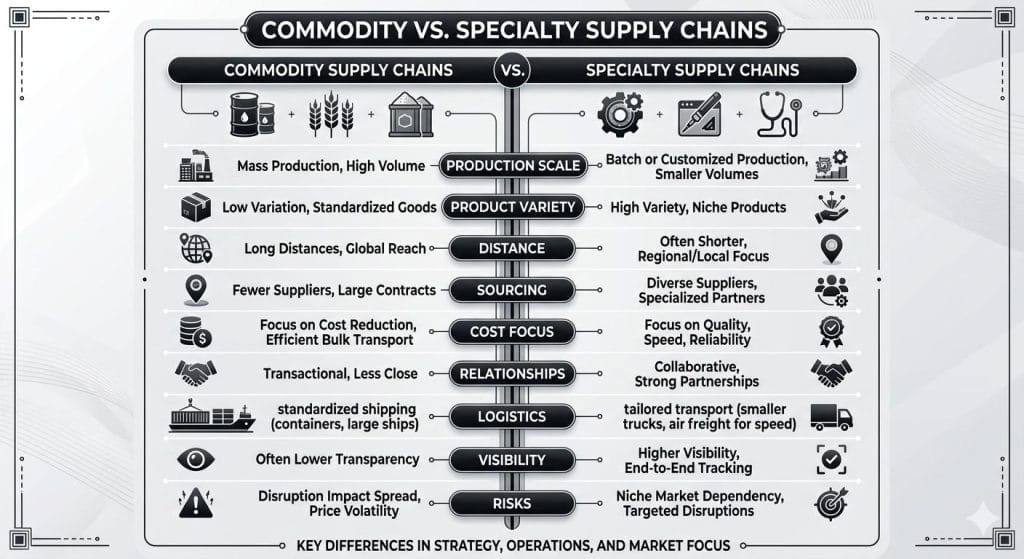
[Insert Image: Comparison infographic showing Commodity vs. Specialty supply chains]
Flavor and Ethics: The Human Element
Beyond the score, there is an ethical dimension to what is specialty coffee? Because specialty coffee is often sourced through Direct Trade or certified fair-trade models, the farmers are paid a significant premium for their quality.
In the commercial market, farmers are often paid the “C-price” (the stock market price for coffee), which frequently falls below the cost of production. In the specialty market, the price is negotiated based on quality.
This financial stability allows farmers to employ better farming practices, invest in better processing equipment, and care for their land sustainably.
The result is a bean that tastes cleaner and more flavorful. While commercial coffee often requires sugar, cream, or syrups to mask burnt or bitter flavors, specialty coffee is designed to be enjoyed black. This highlights the natural sweetness, complex acidity, and unique flavor notes inherent to the bean.
The Journey from Farm to Cup: Producing Arabica Specialty Coffee
To fully appreciate what is specialty coffee?, one must understand the immense effort required to produce it. This journey is divided into four critical stages, each requiring precision.
1. Cultivation and Harvesting
Arabica specialty coffee represents the vast majority of the specialty market. Arabica beans are typically grown at high altitudes (often above 1,200 meters) where the cooler climate slows the growth of the coffee cherry. This slow maturation allows more complex sugars to develop within the seed. Crucially, these cherries are hand-picked at their peak ripeness. In commercial farming, machines strip the branch of both ripe and unripe cherries. In specialty farming, pickers return to the same tree multiple times to ensure only the perfect red cherries are processed.
2. The Processing Methods
Once harvested, the fruit must be removed to reveal the seed (the bean). The method used here drastically changes the flavor profile:
- Washed Process: The fruit is removed before drying. This results in a clean, bright, and acidic cup that highlights the bean’s intrinsic character.
- Natural Process: The bean is dried inside the whole fruit. This leads to a fruity, bold, and wine-like profile with heavy body.
- Honey Process: A middle ground where some mucilage is left on the bean during drying, producing a sweet, balanced, and syrupy body.
3. The Art of the Roast
A specialty roaster’s goal is to highlight the bean’s natural characteristics rather than mask them. This is why you will often see “Light” or “Medium” roasts in specialty shops. Dark roasts tend to burn off the delicate floral and fruity notes that define what is specialty coffee?. The roaster acts as a translator, unlocking the potential created by the farmer.
4. Precision Brewing
The final step is the brew. Whether using a V60, Chemex, Aeropress, or a professional espresso machine, precision is key. Controlling the grind size, water temperature (usually between 90°C–96°C), and brew time is what transforms a high-quality bean into a world-class cup.
The Third Wave Coffee Movement: A Cultural Shift
You cannot discuss what is specialty coffee? without mentioning the “Third Wave” movement. Just as the first wave made coffee available everywhere (instant coffee) and the second wave made coffee popular (Starbucks, espresso bars), the Third Wave treats coffee as an artisanal product, similar to the way we view craft beer or vintage wine.
The third wave coffee movement emphasizes:
- Transparency: Knowing exactly who grew your coffee.
- Sustainability: Ensuring the environment and farmers are protected.
- Education: Baristas are trained as skilled professionals, not just service staff.
It shifted the focus from the “coffee shop” ambiance to the “roastery” and the “farm,” bringing the producer’s story directly to the consumer. By focusing on the origin and the craft, the Third Wave has popularized high-quality beans worldwide and encouraged a new generation to treat coffee brewing as a science.
A Beginner’s Guide: How to Start Drinking Specialty Coffee
If you are new to this world, the transition can be overwhelming. You might be asking, “what is specialty coffee?” in a practical sense—how do I actually experience it without spending a fortune on equipment? Here is the simplest way to start your journey:
- Start with Filter Coffee: Pour-over methods (like the V60 or Kalita Wave) make it easier to taste the subtle notes of the bean without the intensity and pressure of espresso.
- Check the Roast Date: Freshness is everything. Always buy beans that have been roasted within the last two to four weeks. Avoid bags that only list a “Best By” date years in the future.
- Explore Different Origins: Try an Ethiopian bean for floral and citrus notes, a Colombian for balance and caramel, or a Brazilian for chocolatey richness and nuts.
- Taste it Black First: To truly understand the specialty experience, taste your coffee without additives. This allows you to perceive the natural flavor profile. If it is too acidic, try a bean from a different region rather than adding sugar.
Frequently Asked Questions:
What is Specialty Coffee?
To help you find quick answers and optimize for voice search, here are the most common questions regarding what is specialty coffee?
What qualifies as specialty coffee?
Any coffee that scores 80 points or higher on the SCA 100-point scale and has zero primary defects in its green state.
Is specialty coffee more expensive?
Yes. The higher cost reflects the higher standards of farming, fair pay for producers (Direct Trade), and the labor-intensive processing, sorting, and roasting methods required to maintain quality.
Can espresso be specialty coffee?
Absolutely. In fact, espresso is one of the best ways to experience the intensity and body of a specialty bean, provided the extraction is precise and the bean is fresh.
What is the “Third Wave” of coffee?
It is the current cultural movement that views coffee as a craft and an artisanal product, focusing on transparency, direct trade relationships, and brewing precision rather than just caffeine delivery.
Where can I buy specialty coffee?
Look for local independent roasters, specialty cafes that display roast dates, or online retailers who provide detailed information about the farm and producer.
Conclusion
The journey to understand what is specialty coffee? is a journey into flavor, ethics, and science. It is about respecting the work of the farmer, the skill of the roaster, and the palate of the drinker. By choosing specialty, you are not just buying a better cup of coffee; you are supporting a sustainable future for the entire industry.
Whether you are a seasoned Q Grader or someone just buying their first bag