Coffee tasting notes are the natural flavors and aromas found in coffee beans, created by their origin, variety, processing method, roasting profile, and brewing technique. They are not added flavors but sensory descriptors used by coffee professionals to describe what they experience during tasting. Learning how to recognize coffee tasting notes helps you choose better beans, improve your brewing, and appreciate specialty coffee like a professional.
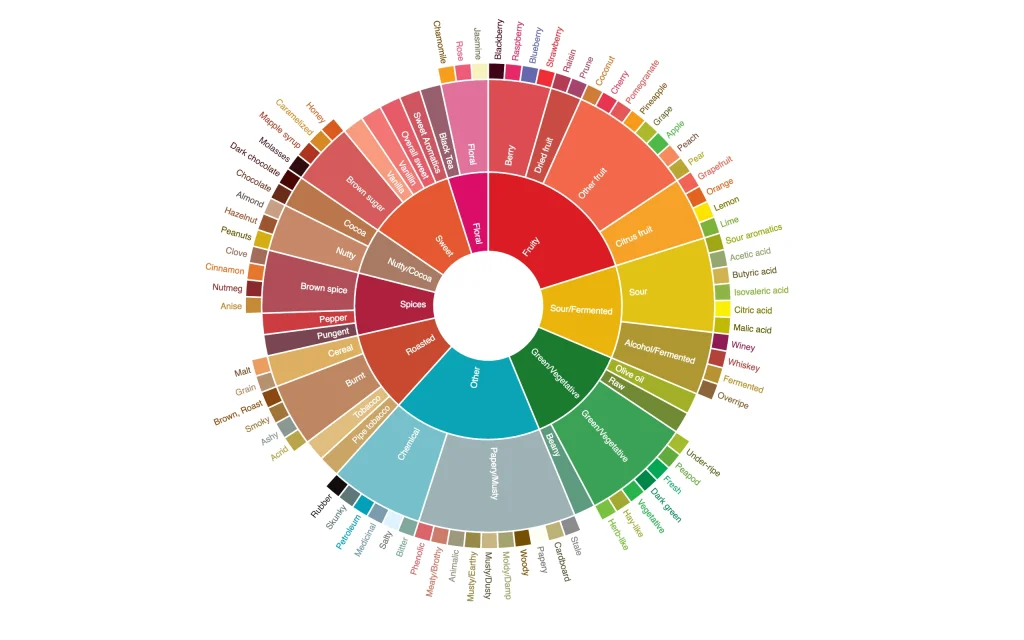
Table of Contents
- What Are Coffee Tasting Notes?
- Taste vs Aroma vs Flavor
- The Chemistry Behind Coffee Flavor
- Why Coffee Contains So Many Flavor Notes
What Are Coffee Tasting Notes?
Coffee tasting notes, sometimes called coffee flavor notes, are descriptive words used by coffee roasters, Q Graders, and sensory professionals to communicate the flavors, aromas, and mouthfeel naturally present in a coffee. These descriptors do not indicate ingredients that have been added to the beans. Instead, they describe similarities between the coffee’s natural aromatic compounds and familiar foods such as berries, chocolate, citrus fruits, flowers, nuts, spices, or caramel.
For example, if a bag lists blueberry, jasmine, and dark chocolate, the coffee does not contain blueberries, flowers, or chocolate. Instead, it contains naturally occurring volatile compounds that stimulate your senses in ways similar to those foods.
This is one of the biggest misconceptions among people discovering specialty coffee. Coffee tasting notes are a language—not a recipe.
Quick Definition
Coffee tasting notes are natural sensory descriptors that explain how a coffee smells and tastes, based on its chemistry, origin, processing method, roast level, and brewing technique.
Professional coffee tasters evaluate these characteristics during coffee cupping, following standardized protocols developed by the Specialty Coffee Association (SCA). The resulting flavor profile helps consumers understand what they can expect before buying a coffee.
Taste vs Aroma vs Flavor: Understanding the Difference
Many people use the words taste and flavor interchangeably, but they describe different sensory experiences. Understanding this distinction makes it much easier to interpret coffee tasting notes correctly.
Taste
Taste is detected by the taste buds on your tongue. Humans recognize five primary tastes:
- Sweet
- Sour
- Bitter
- Salty
- Umami
When evaluating specialty coffee, sweetness, acidity, and bitterness are the most important taste components.
Aroma
Aroma is detected by your olfactory system through hundreds of volatile aromatic compounds released while brewing and drinking coffee. In reality, aroma contributes far more to your overall perception than taste alone.
This is why holding your nose dramatically reduces your ability to recognize coffee flavor notes.
Flavor
Flavor is the complete sensory experience created by combining taste, aroma, mouthfeel, temperature, and aftertaste. When a roaster describes a coffee as having notes of raspberry, caramel, or jasmine, they are referring to the overall flavor—not simply the taste.
| Term | What It Means |
|---|---|
| Taste | Sweet, sour, bitter, salty and umami sensations detected by the tongue. |
| Aroma | The smell of coffee perceived through the nose before and during tasting. |
| Flavor | The combination of taste, aroma, body, acidity and aftertaste. |
The Chemistry Behind Coffee Flavor
Coffee is one of the most chemically complex beverages in the world. Scientists have identified more than 1,000 volatile aromatic compounds inside roasted coffee beans, many of which are also found naturally in fruits, flowers, herbs, nuts, spices, and chocolate.
When you drink coffee, these compounds interact with your olfactory receptors. Your brain compares them with aromas stored in memory and interprets them as recognizable flavors.
For example:
- Citric acid contributes bright citrus-like acidity.
- Malic acid creates apple-like sweetness.
- Phosphoric acid produces sparkling tropical fruit characteristics.
- Pyrazines generate roasted nut and cocoa aromas.
- Esters create fruity notes such as blueberry, strawberry and mango.
- Linalool contributes delicate floral aromas similar to jasmine.
This explains why specialty coffees can remind us of fruits or flowers even though no additional ingredients have ever been added.
Did You Know?
Many of the aromatic compounds found in Ethiopian coffee are chemically identical to compounds naturally present in blueberries, peaches, jasmine flowers, citrus fruits, and tropical fruits. Your brain recognizes these similarities and interprets them as familiar flavors.
Why Coffee Contains So Many Flavor Notes
Every cup of coffee is the result of hundreds of variables working together. Coffee tasting notes begin developing long before roasting and continue evolving until the final extraction.
The most important factors influencing a coffee’s flavor profile include:
- 🌍 Origin and terroir
- ⛰️ Altitude
- 🌱 Coffee variety (Geisha, Bourbon, Typica, SL28, Caturra)
- 🍒 Cherry ripeness
- 💧 Processing method (Washed, Natural, Honey)
- 🔥 Roast profile
- ⚙️ Grind size
- 💦 Water quality
- ☕ Brewing method
- 📈 Extraction yield
Each of these variables changes how aromatic compounds develop and how they are extracted into your cup. This is why the same coffee bean can taste completely different as espresso, pour-over, AeroPress, or French press.
Understanding these variables is the foundation of learning how to identify coffee tasting notes and appreciate the complexity of specialty coffee.
The SCA Coffee Flavor Wheel Explained
The SCA Coffee Flavor Wheel is the world’s most recognized tool for describing coffee tasting notes. Developed by the Specialty Coffee Association in collaboration with World Coffee Research, it provides a standardized vocabulary that coffee professionals use during coffee cupping and sensory analysis.
The wheel is designed to help tasters move from broad flavor families to increasingly specific descriptors.
How to Read the Flavor Wheel
- Start from the center with general flavor families.
- Move outward toward more detailed categories.
- Finish on the outer ring where individual tasting notes are identified.
For example:
Fruity → Berry → Blueberry
or
Sweet → Brown Sugar → Caramel
This systematic approach improves consistency between coffee professionals and helps consumers understand what they are tasting.
Main Coffee Flavor Categories
Although every coffee is unique, most coffee flavor profiles fall into several recognizable categories.
| Flavor Family | Typical Notes | Common Origins |
|---|---|---|
| Fruity | Blueberry, Strawberry, Peach, Mango, Lemon | Ethiopia, Kenya, Colombia |
| Floral | Jasmine, Rose, Lavender, Orange Blossom | Ethiopia, Panama, Rwanda |
| Chocolate & Cocoa | Milk Chocolate, Dark Chocolate, Cocoa | Brazil, Colombia, Guatemala |
| Nutty | Hazelnut, Almond, Walnut, Peanut | Brazil, Honduras |
| Sweet | Caramel, Honey, Brown Sugar, Maple Syrup | Costa Rica, El Salvador |
| Spicy | Cinnamon, Clove, Nutmeg, Black Pepper | Indonesia, India |
| Roasted | Toast, Tobacco, Smoke | Dark Roasts |
Recognizing these families makes it easier to identify more complex tasting notes during future coffee tastings.
How Coffee Origin Influences Flavor
Origin is one of the strongest factors shaping a coffee’s flavor profile. Climate, altitude, rainfall, soil composition, and local coffee varieties all contribute to the final cup.
African Coffees
African coffees are known for their vibrant acidity and expressive fruit notes.
- Blueberry
- Blackcurrant
- Citrus
- Jasmine
- Bergamot
Latin American Coffees
Central and South American coffees generally emphasize sweetness and balance.
- Chocolate
- Caramel
- Hazelnut
- Brown Sugar
- Apple
Asia-Pacific Coffees
Coffees from Indonesia and surrounding regions usually develop heavier body and earthy complexity.
- Dark Chocolate
- Tobacco
- Cedar
- Spices
- Herbal Notes
While regional profiles provide useful guidance, individual farms and processing methods can dramatically influence the final flavor profile.
How Coffee Processing Changes Tasting Notes
The processing method determines how the coffee cherry is handled after harvest. It has a dramatic influence on sweetness, acidity, body, and aroma.
| Processing Method | Typical Flavor Profile |
|---|---|
| Washed Process | Clean, bright acidity, floral, citrus, tea-like body |
| Natural Process | Berry, tropical fruit, wine-like sweetness, heavier body |
| Honey Process | Balanced sweetness, caramel, stone fruit, silky mouthfeel |
Many of the famous blueberry coffees from Ethiopia use the Natural Process, while washed coffees often showcase elegant citrus and floral characteristics.
How Roast Level Affects Coffee Flavor
Roasting transforms green coffee into the aromatic beverage we enjoy. During roasting, hundreds of chemical reactions create new flavor compounds through caramelization and the Maillard reaction.
| Roast Level | Typical Flavor Notes |
|---|---|
| Light Roast | Floral, Citrus, Berry, High Acidity |
| Medium Roast | Chocolate, Caramel, Balanced Sweetness |
| Medium-Dark Roast | Cocoa, Roasted Nuts, Molasses |
| Dark Roast | Smoke, Tobacco, Dark Chocolate, Bitterness |
Light roasts preserve origin character, while darker roasts increasingly emphasize roast-derived flavors over the bean’s natural characteristics.
How Brewing Method Changes Coffee Tasting Notes
The brewing method determines which compounds are extracted into your cup. Even using the same beans, different brewing techniques can produce dramatically different sensory experiences.
| Brewing Method | Flavor Characteristics |
|---|---|
| Pour Over | High clarity, floral notes, bright acidity |
| Espresso | Rich body, chocolate, caramel, concentrated sweetness |
| French Press | Heavy body, earthy flavors, full mouthfeel |
| AeroPress | Balanced sweetness with excellent clarity |
| Cold Brew | Low acidity, chocolate, smooth sweetness |
Experimenting with multiple brewing methods is one of the fastest ways to understand how extraction influences coffee tasting notes.
Expert Tip
If you want to identify delicate floral and fruity notes, brew your coffee as a pour-over using freshly roasted specialty coffee, filtered water, and a medium grind size. Allow the coffee to cool slightly before tasting, as many aromatic compounds become more noticeable between 55°C and 65°C (131°F–149°F).
How to Identify Coffee Tasting Notes Like a Professional
You don’t need to become a certified Q Grader to recognize coffee tasting notes. By following the same sensory techniques used by coffee professionals, you can dramatically improve your palate and discover flavors you may have never noticed before.
The key is slowing down, paying attention, and comparing coffees side by side rather than drinking them only for caffeine.
Step 1 – Smell the Dry Coffee
Before adding water, smell the freshly ground coffee. This is called the fragrance. Fresh specialty coffee often reveals floral, fruity, chocolate, caramel or nutty aromas even before brewing.
Step 2 – Smell After Brewing
Immediately after brewing, inhale deeply. The hot water releases hundreds of volatile aromatic compounds that define the coffee’s aroma.
Step 3 – Slurp the Coffee
Professional tasters intentionally slurp coffee loudly. The slurp sprays tiny droplets across your palate while simultaneously sending aromatic compounds toward your retronasal olfactory receptors.
Although it sounds strange, this technique dramatically improves flavor perception.
Step 4 – Evaluate Acidity
Acidity is not bitterness.
Good acidity gives coffee brightness, liveliness and structure. Think about the pleasant freshness of oranges, apples or grapes—not stomach acid.
- Low acidity → smooth and mellow
- Medium acidity → balanced
- High acidity → vibrant and juicy
Step 5 – Evaluate Body
Body describes the physical texture of coffee.
| Body | Feels Like |
|---|---|
| Light | Tea |
| Medium | Whole milk |
| Heavy | Cream |
Step 6 – Notice the Aftertaste
High-quality specialty coffee leaves a clean, sweet, lingering finish. Poor-quality coffee often leaves harsh bitterness or unpleasant astringency.
What Is Coffee Cupping?
Coffee cupping is the international standard method used to evaluate coffee quality. Importers, exporters, producers, roasters and Q Graders all rely on cupping to compare coffees objectively.
The process follows protocols established by the Specialty Coffee Association (SCA).
Basic Coffee Cupping Method
- Grind freshly roasted coffee.
- Place approximately 8.25 grams into a cupping bowl.
- Add water at 93°C (200°F).
- Wait four minutes.
- Break the crust while smelling the aroma.
- Remove floating grounds.
- Taste using a spoon with a loud slurp.
Cupping allows tasters to evaluate aroma, flavor, acidity, sweetness, body, balance, uniformity, clean cup, and overall quality without brewing variables affecting the results.
Espresso vs Filter Coffee Tasting Notes
The same coffee bean can produce remarkably different tasting notes depending on the brewing method.
| Espresso | Filter Coffee |
|---|---|
| Higher body | Higher clarity |
| Chocolate | Floral |
| Caramel | Citrus |
| Dense sweetness | Bright acidity |
| Concentrated finish | Complex aroma |
If your goal is identifying subtle coffee tasting notes, pour-over brewing methods usually provide greater clarity than espresso.
Common Mistakes When Tasting Coffee
Many beginners struggle to identify tasting notes because of simple mistakes during brewing or tasting.
- Using stale coffee beans.
- Grinding coffee too early.
- Brewing with boiling water.
- Using poor-quality water.
- Adding sugar or milk before tasting.
- Drinking coffee while it is extremely hot.
- Expecting to taste literal blueberries or chocolate.
Allowing coffee to cool for several minutes often reveals entirely new flavor notes that were hidden at higher temperatures.
How to Build Your Personal Flavor Library
Professional tasters spend years building a mental library of flavors. Every fruit, spice, chocolate or nut you taste becomes a future reference point when evaluating coffee.
Practice With Real Foods
- Fresh berries
- Citrus fruits
- Stone fruits
- Dark chocolate
- Milk chocolate
- Honey
- Brown sugar
- Roasted almonds
- Hazelnuts
- Cinnamon
- Cloves
- Black tea
- Jasmine tea
The broader your flavor vocabulary becomes, the easier it is to recognize similar compounds inside coffee.
Keep a Coffee Tasting Journal
One of the fastest ways to improve is recording every coffee you drink.
| Category | Your Notes |
|---|---|
| Origin | |
| Variety | |
| Processing | |
| Roast Level | |
| Aroma | |
| Flavor Notes | |
| Body | |
| Acidity | |
| Sweetness | |
| Aftertaste | |
| Overall Score |
Keeping consistent tasting records allows you to recognize patterns and quickly discover which origins, roast profiles and processing methods you enjoy most.
Professional Tips for Recognizing Coffee Tasting Notes
- Buy freshly roasted specialty coffee.
- Prefer single origin coffees while learning.
- Use filtered water.
- Grind immediately before brewing.
- Taste coffee at different temperatures.
- Compare two coffees side by side.
- Use the SCA Coffee Flavor Wheel every session.
- Keep a tasting journal.
- Cup coffee regularly.
- Practice consistently.
Expert Advice
Don’t try to identify twenty flavor notes at once. First decide whether the coffee is fruity, nutty, floral or chocolate-forward. Once you identify the main family, gradually narrow your description toward more specific notes like blueberry, peach, caramel or hazelnut. This is exactly how professional cuppers use the SCA Coffee Flavor Wheel.
Frequently Asked Questions About Coffee Tasting Notes
What are coffee tasting notes?
Coffee tasting notes are descriptive words used to explain the natural flavors and aromas found in coffee beans. They are not added ingredients but sensory descriptors based on the coffee’s chemistry, origin, processing method, roast profile, and brewing technique.
Are coffee tasting notes real flavors?
Yes. Coffee naturally contains more than one thousand aromatic compounds. Many of these compounds are also found in fruits, flowers, spices, chocolate, and nuts, which is why coffee can remind us of these familiar flavors.
Are flavors added to specialty coffee?
No. Specialty coffee does not contain added flavors unless the packaging explicitly states that it is flavored coffee. Notes such as blueberry, caramel, or jasmine simply describe naturally occurring aromatic compounds.
Why can’t I taste the flavor notes listed on the bag?
Your brewing method, grinder quality, water chemistry, extraction, and personal sensory experience all influence flavor perception. Taste is also subjective, so two people may describe the same coffee differently.
What is the Coffee Flavor Wheel?
The SCA Coffee Flavor Wheel is the international standard for describing coffee flavors. It organizes flavor families into increasingly specific tasting notes and provides a common language for coffee professionals.
Does roast level affect tasting notes?
Absolutely. Light roasts preserve origin characteristics and fruit notes, while darker roasts emphasize chocolate, caramel, roasted nuts, smoke, and bittersweet flavors.
Which brewing method highlights tasting notes the best?
Pour-over methods such as the V60 or Chemex generally produce the highest clarity, making delicate floral and fruity notes easier to identify than espresso or French press.
What is coffee cupping?
Coffee cupping is the standardized tasting method used by coffee professionals to evaluate aroma, flavor, sweetness, acidity, body, aftertaste, balance, and overall quality.
Do expensive coffees have better tasting notes?
Not always, but high-quality specialty coffees usually offer greater sweetness, complexity, clarity, and a wider range of flavor descriptors because of better farming, processing, and roasting practices.
How can I improve my coffee tasting skills?
Drink a variety of single-origin coffees, compare them side by side, use the SCA Coffee Flavor Wheel, keep a tasting journal, and practice identifying broad flavor categories before moving to more specific descriptors.
Key Takeaways
- Coffee tasting notes are natural sensory descriptors, not added flavors.
- Origin, variety, altitude, processing, roasting, and brewing all influence flavor.
- The SCA Coffee Flavor Wheel provides the industry’s standard tasting vocabulary.
- Coffee flavor is created by the combination of aroma, taste, body, acidity, sweetness, and aftertaste.
- Regular tasting practice dramatically improves your ability to recognize flavor notes.
- Freshly roasted specialty coffee produces the clearest and most expressive flavor profiles.
Conclusion
Understanding coffee tasting notes transforms the way you experience coffee. Instead of focusing only on strength or caffeine, you begin appreciating the incredible diversity created by origin, terroir, processing, roasting, and brewing.
Every cup tells a story. A washed Ethiopian coffee may reveal jasmine, bergamot, and citrus, while a natural Brazilian coffee might showcase chocolate, hazelnut, and caramel. These flavors are not added after roasting—they are the natural expression of the coffee bean itself.
Developing your palate takes practice, but every tasting session expands your sensory memory. By comparing different origins, experimenting with brewing methods, and using the SCA Coffee Flavor Wheel, you’ll gradually recognize increasingly complex coffee flavor notes with confidence.
Whether you’re a beginner or an experienced coffee enthusiast, learning to identify coffee tasting notes is one of the most rewarding skills in specialty coffee. Every cup becomes an opportunity to discover something new.
Continue Learning About Coffee
If you enjoyed this guide, continue exploring our Coffee Basics collection:
- What Is Specialty Coffee?
- Coffee Roast Levels Explained
- Single Origin vs Blend Coffee
- Arabica vs Robusta Coffee
- Coffee Processing Methods Explained
- Coffee Brewing Methods Guide
- How to Brew Pour Over Coffee
- Espresso Explained
- Coffee Grind Size Chart
- Coffee Extraction Guide
Start Exploring Coffee Flavor Today
The best way to understand coffee tasting notes is through experience. Choose two different single-origin coffees, brew them using the same method, compare them side by side, and use the SCA Coffee Flavor Wheel to describe what you taste.
Over time you’ll build your own flavor vocabulary and discover why specialty coffee offers one of the richest sensory experiences of any beverage in the world.