The movement that turned coffee from a commodity into a craft — and the surprising 2002 essay that gave it a name.
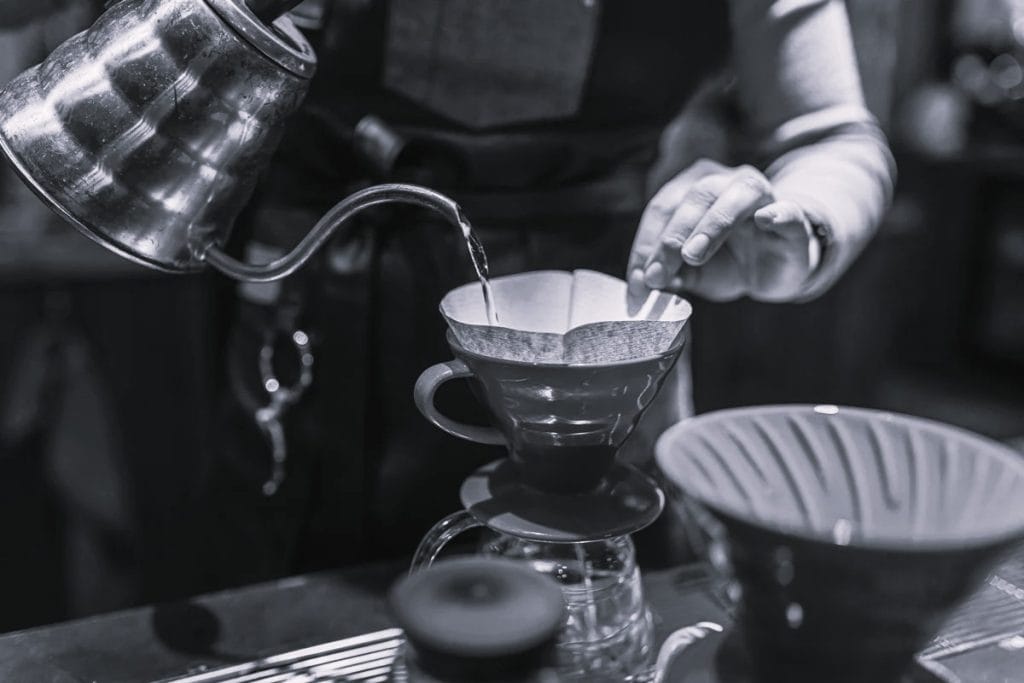
Third wave coffee is a movement that treats coffee as an artisanal product, similar to fine wine, rather than a commodity or a fast-consumption beverage. It emphasizes single-origin beans, direct trade with farmers, light roasting, and precision brewing methods that highlight a coffee’s terroir. The term was coined in 2002 by roaster Trish Rothgeb to describe a shift away from both the mass-market coffee of the “first wave” (Folgers, instant coffee) and the espresso-bar culture of the “second wave” (Starbucks, Peet’s). In third wave coffee, the bean itself — its farm, variety, altitude, and processing — takes center stage, and baristas and roasters are treated as craftspeople rather than service staff.
Ask any barista where coffee culture is heading and you’ll likely hear the phrase “third wave coffee.” It’s not marketing jargon — it’s a real turning point in how coffee moves from farm to cup.
What Does “Third Wave Coffee” Mean?
The phrase describes the idea that coffee culture has moved through three distinct eras, or “waves,” each defined by how consumers and producers relate to the product. In the third wave, coffee is no longer just a caffeine delivery system — it is treated as a crafted, traceable product where origin, variety, processing method, and roast profile matter as much as they do in specialty wine or craft beer.
The Three Waves of Coffee
First Wave: Coffee as a Commodity
The first wave began in the late 19th and early 20th centuries, when coffee became a mass-market household product. Brands like Folgers and Maxwell House focused on convenience, shelf stability, and instant coffee, prioritizing volume over quality. Coffee was cheap, widely available, and rarely discussed in terms of origin or flavor.
Second Wave: Coffee as an Experience
Starting in the 1960s and accelerating through the 1990s, the second wave — led by companies such as Peet’s Coffee and, most visibly, Starbucks — introduced espresso-based drinks, coffeehouse culture, and the idea of coffee as a lifestyle experience. Quality improved, but the focus remained on the drink experience rather than the bean’s origin.
Third Wave: Coffee as a Craft
The third wave, which emerged in the early 2000s, shifts the focus back to the raw material: the coffee bean itself. It treats coffee production the way the specialty wine industry treats grapes — emphasizing farm-level traceability, varietal, altitude, processing method, and roast profile.
The History of Third Wave Coffee
Origins of the Term (Trish Rothgeb, 2002)
The term “third wave coffee” was coined by roaster Trish Rothgeb in a 2002 essay titled “Norway and Coffee,” published in The Flamekeeper, the newsletter of the Roasters Guild. Rothgeb used the phrase to describe a shift she observed in coffee culture — particularly in Norway, where roasters like Tim Wendelboe were pioneering extremely light roasts designed to showcase a bean’s natural flavor rather than mask it.
The Pioneers of the Movement
Several U.S. roasters became closely associated with the early third wave movement, including Intelligentsia Coffee (Chicago), Stumptown Coffee Roasters (Portland), and Counter Culture Coffee (Durham). These companies pioneered direct trade relationships with farmers and championed transparency about sourcing. Blue Bottle Coffee later brought third wave principles to a wider retail audience.
How Third Wave Coffee Spread Worldwide
Through the 2000s and 2010s, the movement spread globally, supported by organizations like the Specialty Coffee Association (SCA), which formalized cupping standards and quality scoring for green coffee. Independent roasters from London to Melbourne to Tokyo adopted third wave principles, and consumers increasingly sought out cafés that listed a coffee’s farm, altitude, and processing method on the menu.
What Makes Coffee “Third Wave”?
Direct Trade and Traceability
Rather than buying anonymous commodity-grade beans through brokers, third wave roasters often build direct relationships with individual farms or cooperatives, paying premiums for quality and giving consumers visibility into exactly where their coffee was grown.
Single-Origin and Terroir
Third wave coffee favors single-origin beans over blends, mirroring the wine industry’s concept of terroir: the idea that soil, altitude, climate, and processing method give each origin a distinct flavor signature.
Light Roasting Philosophy
Unlike the darker roasts common in second wave coffee, third wave roasters typically roast lighter to preserve a bean’s original acidity, sweetness, and flavor notes rather than developing heavy roast-driven bitterness.
Precision Brewing Methods
Manual brewing methods such as pour-over (V60, Chemex), AeroPress, and siphon brewing became emblematic of the third wave, allowing baristas to control water temperature, grind size, and extraction time to highlight a specific coffee’s characteristics.
Third Wave vs Second Wave Coffee
| Aspect | Second Wave | Third Wave |
|---|---|---|
| Focus | The drink experience | The coffee itself |
| Roast | Medium to dark | Light to medium |
| Sourcing | Commodity / blended | Single-origin, direct trade |
| Brewing | Espresso-based drinks | Manual, precision methods |
| Analogy | Fast food | Fine dining / craft wine |
Why Third Wave Coffee Matters Today
Third wave coffee reshaped consumer expectations around transparency, sustainability, and quality in the coffee supply chain. It pushed the industry toward fairer farmer compensation, more rigorous quality standards, and a level of product education previously reserved for wine and craft beer. Most specialty coffee shops today — including roasters aligned with an emerging “fourth wave” focused on sustainability and technology — still build on third wave foundations.
Frequently Asked Questions
Who coined the term “third wave coffee”?
Roaster Trish Rothgeb coined the term in her 2002 essay “Norway and Coffee,” published in The Flamekeeper newsletter of the Roasters Guild.
What is the difference between second wave and third wave coffee?
Second wave coffee focuses on the coffeehouse experience and espresso-based drinks, as popularized by Starbucks. Third wave coffee focuses on the bean itself — its origin, variety, and roast profile — treating coffee as an artisanal product.
Is third wave coffee the same as specialty coffee?
The terms overlap heavily. “Specialty coffee” is a quality classification (coffee scoring 80+ points on the SCA’s 100-point scale), while “third wave” describes the broader cultural movement and philosophy that specialty coffee is built on.
What are examples of third wave coffee brands?
Early pioneers include Intelligentsia Coffee, Stumptown Coffee Roasters, Counter Culture Coffee, and Blue Bottle Coffee, alongside international roasters like Tim Wendelboe in Norway.
Is third wave coffee more expensive?
Usually, yes. Direct trade premiums, meticulous sourcing, and small-batch roasting cost more than commodity-grade coffee, and that cost is generally passed on to the consumer.
Conclusion
Third wave coffee turned a once-anonymous commodity into a traceable, craft product — shifting focus from the drink to the bean itself. Understanding its history explains why today’s best cafés talk about farms, varietals, and roast dates instead of just “regular or decaf.”